
Hail-Damaged Windows: What to Do After a Black Hills Storm
Hail in the Black Hills tends to arrive fast, hit hard for ten minutes and leave a mess that is hard to read. Some broken windows are obvious. Others show up a week later as a chalky dent in a vinyl frame, a screen that sags or a pane that starts to fog. This guide walks through what to do with hail-damaged windows in the hours and days after a storm, in the order that protects your house and your options.
Rapid City Window Pros is a free matching service, not a window company. We don't inspect damage, handle insurance claims or install windows. Independent local window companies do that work, and the steps below help you deal with them on your terms.
Why hail-damaged windows are a Rapid City problem
Big hail is not rare here. A few dated storms show the pattern:
| Date | Where | Reported hail |
|---|---|---|
| July 27, 2015 | Western South Dakota; Hill City | Up to 3.5 in; baseball-size reported in Hill City |
| July 10, 2020 | Rapid City, west and southwest of downtown | 3 to 3.25 in (NWS) |
| August 18, 2025 | South and southwest Rapid City | About 3 in |
| June 22, 2026 | West side of Rapid City | Golf-ball size |
Local reports also describe a hailstorm over west Rapid City, Black Hawk and Piedmont in August 2017. Add more than half of Rapid City homes being built before 1980, many on their second set of aging windows, and a single storm can crack glass on whole sides of a neighborhood.
Step 1: Make the house safe and keep weather out
Broken glass and open sashes come first. Before anything else:
- Keep kids and pets away from rooms with broken panes. Wear heavy gloves and shoes, and pick up large shards before vacuuming.
- If glass is cracked but still in the frame, leave it alone. Run painter's tape across the crack to keep it from spreading or falling out.
- If a pane is gone, cover the opening from the outside with plywood or OSB screwed to the trim, or from the inside with heavy plastic sheeting taped and stapled to the casing. Plastic alone won't stand up to a Black Hills wind for long, so treat it as a one-night fix.
- Keep receipts for plywood, plastic, tape and any emergency board-up service. Many policies treat reasonable steps to prevent further damage as part of the claim, but read yours to confirm.
Don't throw away broken sashes, screens or glass yet. They are evidence.
Step 2: Photograph everything before it changes
Good photos made on the day of the storm are worth more than any later description. Work around the house in one direction so nothing is missed:
- A wide shot of each side of the house, then close-ups of every window on that side.
- Cracked, starred or shattered glass, with a coin or tape measure in the frame for scale.
- Dents, splits and chips in vinyl frames, aluminum cladding and metal wraps, shot at an angle so the light shows the dents.
- Torn, punctured or bent screens, still in place if possible.
- Hailstones on the lawn or deck next to a ruler, as soon as the storm passes and before they melt.
- Related damage on the same side: dented siding, gutters, downspouts, window wells and the roof if you can see it safely from the ground.
Write down the date and time of the storm, and save any news story or weather alert about it.
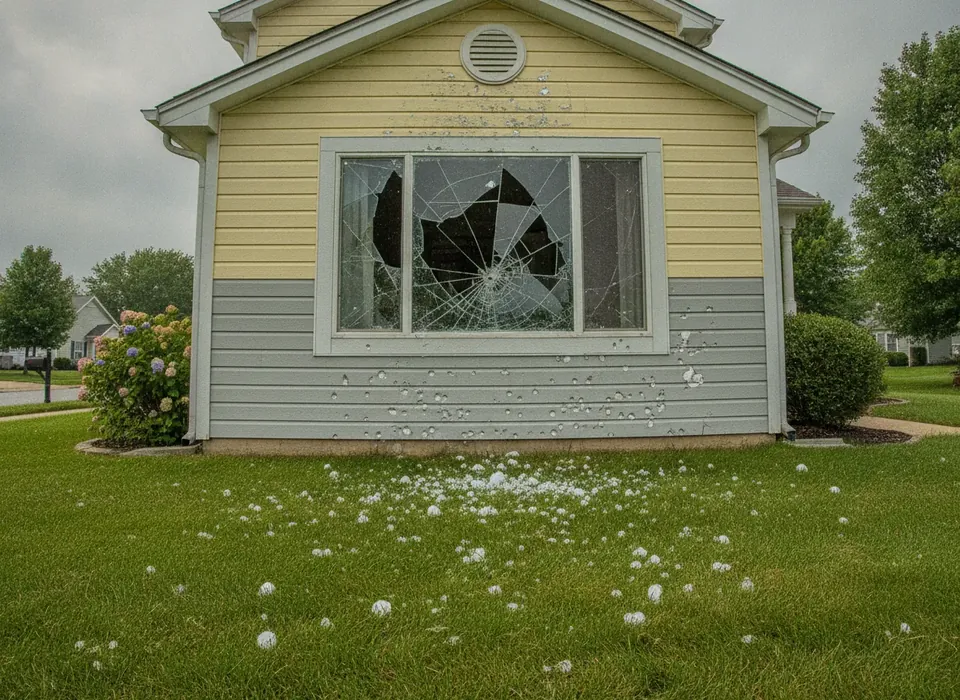
Step 3: Know what hail damage on windows looks like
Glass is the easy part. The damage people miss is usually in the frame and the seal:
| What you see | Where to look | What it usually means |
|---|---|---|
| Cracked, starred or broken glass | Outer pane first; the inner pane may be intact | The glass unit needs replacing at minimum |
| Dents, splits or chips in the frame | Sills, sash tops, aluminum cladding or wraps on the weather side | Cosmetic dents may be repairable; split vinyl or bent cladding often means a new window |
| Torn or bent screens | Every screen on the storm side | Screen repair or replacement |
| Fog or moisture between panes weeks later | Windows that took direct hits | A seal may have failed; worth noting even if it appears after the claim is opened |
| Broken latches, cranks or balances | Operating parts on exposed sashes | Hardware repair, or replacement if parts aren't available |
If fog appears later in a window that was hit, photograph it and tell your agent. Our guide to foggy window repair vs. replacement covers what can be fixed with new glass alone.
Step 4: Read your policy and call your agent
Before anyone gives you a number, find your homeowners policy and look for three things: whether it pays actual cash value or replacement cost, whether there is a separate wind/hail deductible, and how long you have to report damage. Then call your agent. A local agent who spoke to KOTA after the June 2026 storm said to check for broken windows and roof holes first and noted that adjusters typically come out within a few days to a week.
Two South Dakota points worth knowing. State law requires insurers to respond to claim communications within 30 days (SDCL 58-33-67). And you pick your own contractor; the insurer doesn't get to choose who replaces your windows. We cover the policy side in more depth in does homeowners insurance cover hail-damaged windows.
After a hailstorm: three rules that protect you
- Walk away from any contractor who offers to pay, waive or rebate your deductible. For roofing it is illegal in South Dakota (SDCL 37-24-50), and it is a red flag in any trade.
- If you sign a contract at your door or kitchen table, South Dakota law generally lets you cancel until midnight of the third business day. "Sign today" pressure is a reason to slow down.
- No cash-only deals and no full payment up front. Get a written contract. The Attorney General's Consumer Protection line is 1-800-300-1986.
Step 5: Get an inspection and written quotes
Once the house is weather-tight, have a window company look at the damage in person. A good inspection separates windows that need new glass from those with damaged frames, and notes screens and hardware too. Ask for the findings in writing with photos, so you can share them with your adjuster.
Before you let anyone start work, ask each installer for:
- Their South Dakota contractor's excise tax license number. South Dakota has no state window-contractor license, but contractors need this tax license; verify it at 1-800-829-9188.
- Proof of insurance.
- EPA Lead-Safe Certified Firm status if your home was built before 1978. Federal law requires it for window replacement in older homes.
- A City of Rapid City contractor license, or a Spearfish city license inside Spearfish, where required.
- A written, itemized scope: which windows, repair or replace, glass package, frame material, install method, trim, disposal and permit if any.
We don't verify licenses or insurance, so make these checks yourself. The hail damage window replacement page explains how installers usually scope hail work, and the window replacement cost guide has published price ranges for planning.
Step 6: Watch for storm chasers
After big hail years, the City of Rapid City has warned residents about out-of-town crews selling roofing, siding and window work who can't produce credentials. Common signs: a knock on the door the day after the storm, a truck with out-of-state plates and no local address, promises that your insurance will cover everything, and pressure to sign a contingency agreement on the spot. Our post on storm-chaser red flags goes through the full list.
Repair or replace after hail?
If only the glass is broken and the frame is sound, a new insulated glass unit is often enough. If frames are split, cladding is bent, or the windows were already old and drafty, replacing them may make more sense. The damage, your policy terms and the age of the windows all factor in, so get the inspection before you decide. The window repair and glass page covers the repair side.
When you're ready, describe your windows once and independent local installers can reply with quotes, or call (877) 265-2390.
Frequently asked questions
What should I do first if hail breaks a window?
Keep people and pets away from broken glass, tape cracked panes, and cover any open frame with plywood outside or heavy plastic inside. Keep receipts for board-up materials, then photograph every window before anything is cleaned up or repaired.
What does hail damage look like on vinyl windows?
Look for cracked or starred glass, dents, splits and chips in the vinyl frame and sill, bent aluminum cladding, torn screens and broken latches. Fog between the panes can show up weeks later if a seal was damaged.
Can a window contractor pay my insurance deductible?
No reputable one will offer to. Paying or rebating a deductible is illegal for residential roofing contractors in South Dakota under SDCL 37-24-50, and it is a red flag in any trade. Your deductible is yours to pay.
How long does my insurer have to respond to a hail claim in South Dakota?
State law requires insurers to acknowledge and act on claim communications within 30 days (SDCL 58-33-67). Call your agent for timelines on your specific policy.